Co-authored book · 2022
Publications
Dr. Garber writes to organize and communicate ideas, clarify thinking, and help professionals and families better understand children, family relationships, and the law. This bibliography brings together the works listed in his November 18, 2026 curriculum vitae and items retained from the current website pending verification.
Try concepts as well as exact titles. Publication matches and related CV-documented presentations/trainings are shown separately.
Search results
Publications
No matching publications or presentations were found.
Related presentations and trainings
Search covers all 62 bibliography records by title, full citation text, year, publication type, source, and curated topic tags. It also searches 93 CV-documented presentations and trainings by title, date, organization, and location; these appear separately from publications. Search does not index the contents of linked full-text documents. Open an entry's link to read the document when full text is available.
Featured Recent Works
Peer-reviewed article · 2024
Professional article · 2024
Peer-reviewed article · in press, 2026
Books
Browse Dr. Garber's published books. Scroll horizontally to see additional covers; all publications, including chapters in edited volumes, appear in the searchable bibliography below.
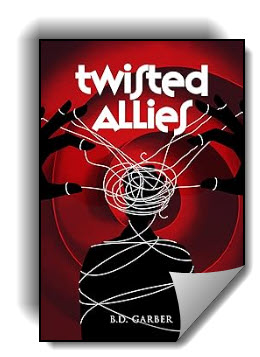 Twisted Allies2023 · fiction
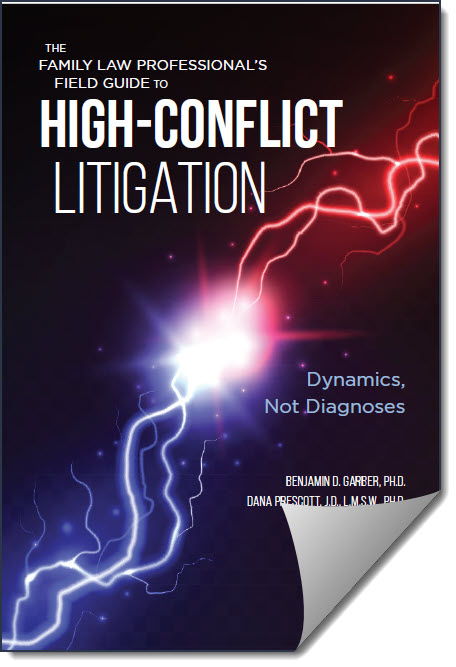 The family law professional's field guide to high conflict litigation: Dynamics, not diagnoses2022 · published
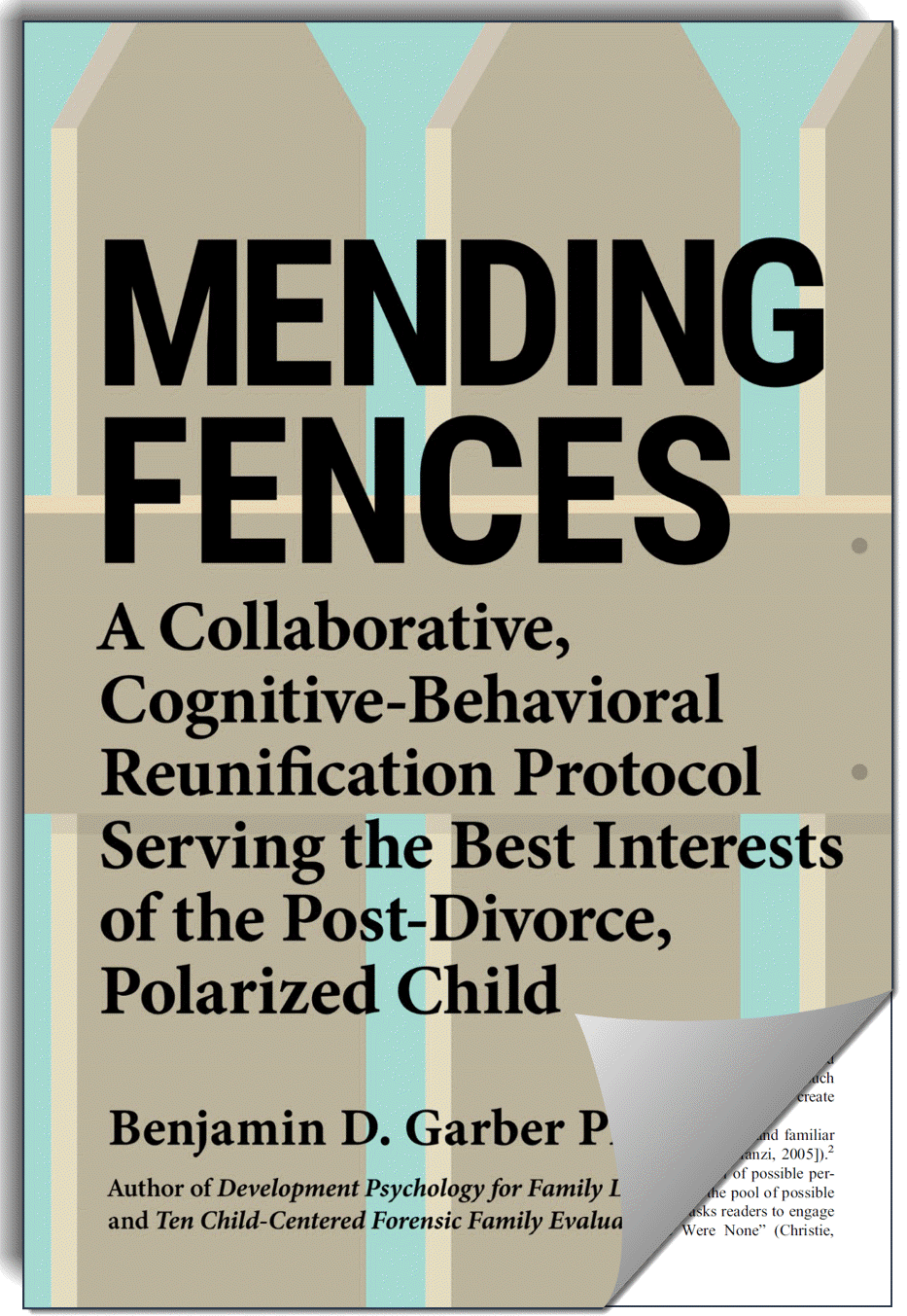 Mending Fences: A collaborative, cognitive-behavioral reunification protocol2021 · published
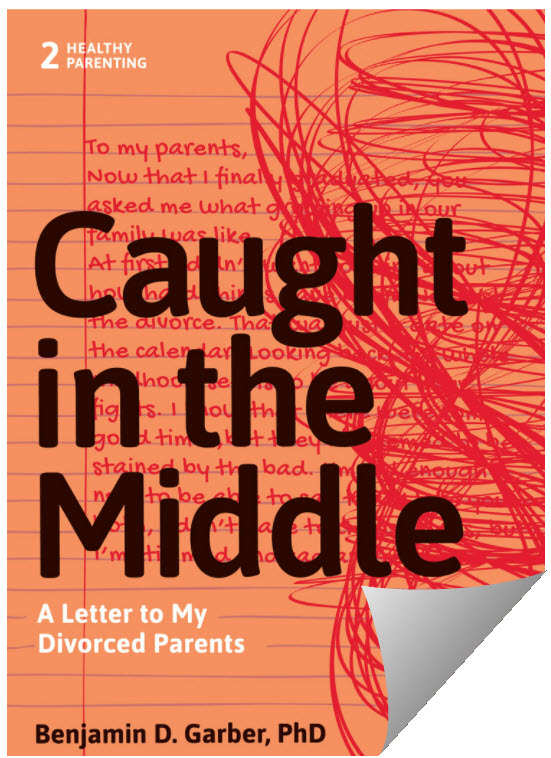 Caught in the Middle: A Letter to My Divorced Parents2019 · published
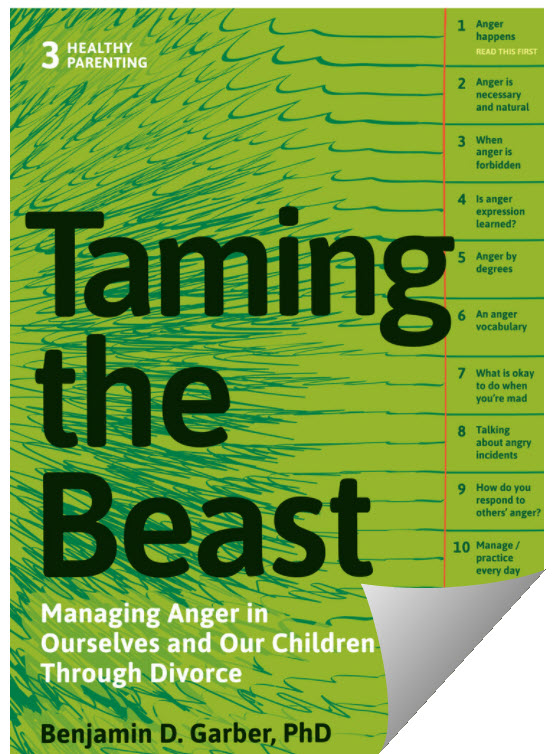 Managing the Beast: Managing Anger in Ourselves and Our Children Through Divorce2018 · published
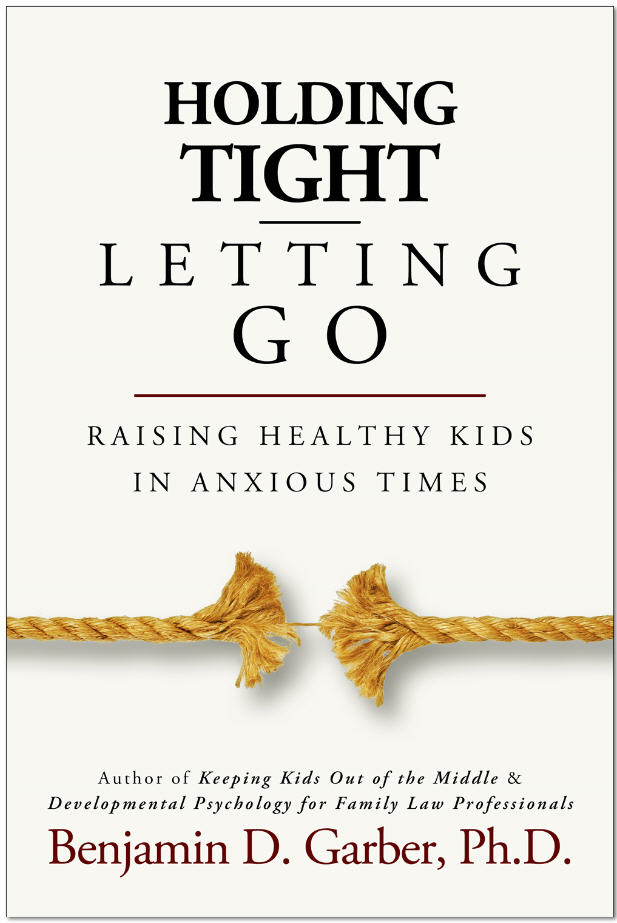 Holding Tight/Letting Go: Raising Healthy Kids in Anxious Times2016 · published
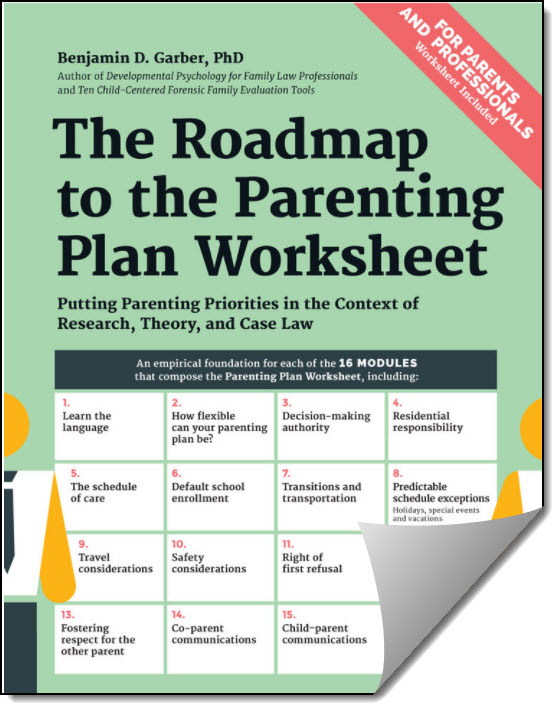 The Roadmap to the Parenting Plan Worksheet2015 · published
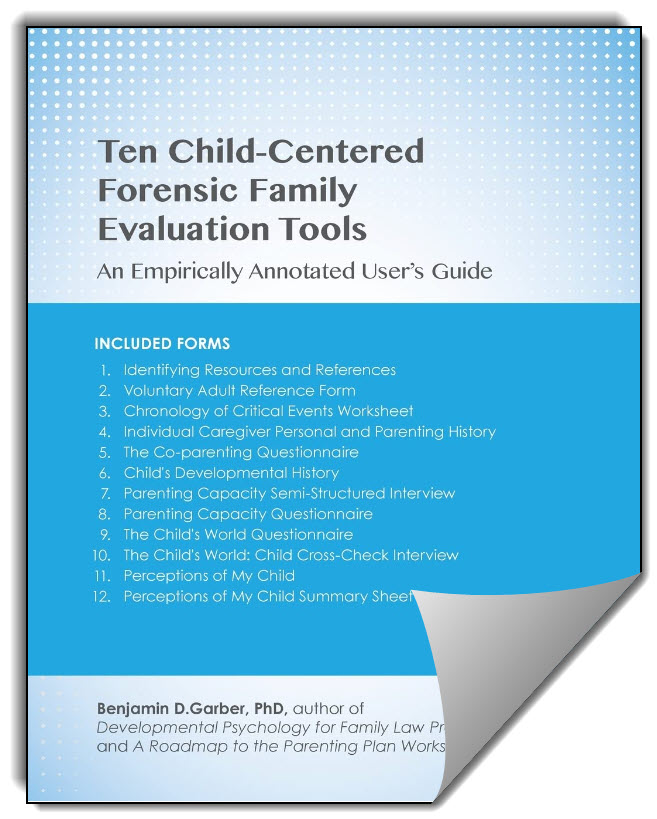 Ten Child-Centered Forensic Family Evaluation Tools2015 · published
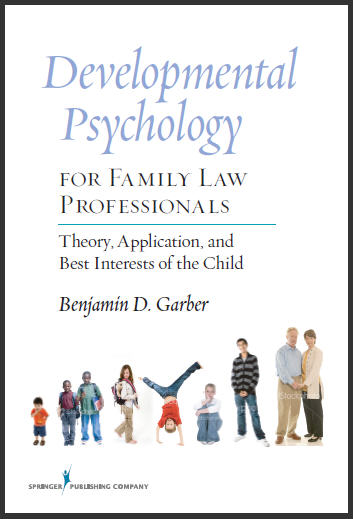 Developmental Psychology for Family Law Professionals2009 · published
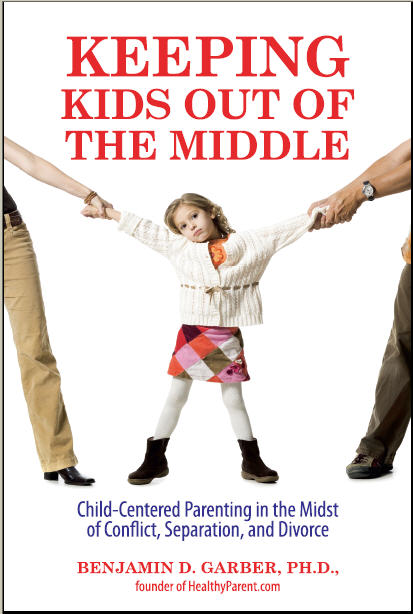 Keeping Kids Out of the Middle2008 · published
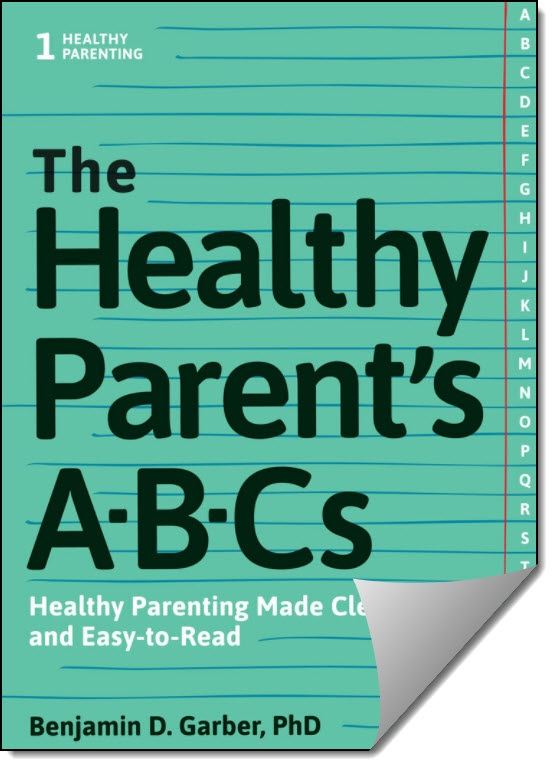 The Healthy Parent’s ABCs2003 · published
62 publications
Chronological Bibliography
Browse the complete list, or use the search above to narrow it by title, year, publication type, or topic.
Related presentations and trainings
These are CV-listed professional programs, not publications.
- Garber, B.D. (in press, 2027). Evaluating the co-occurring variables associated with resist/refuse dynamics (RRD): Mapping Garber’s (2024) Rubric onto the component parts of parenting plan evaluation. In D. Prescott, T. Fadgen, G. Charlton, and C. Whang, Eds, Research Handbook on Family Law and Mental Health Elgar Publishing.
- Advance orientation in family law (2027). Elgar Research Handbook on Family Law and Mental Health
- Don’t mistake one tree for the forest: A rubric minimizes bias and premature closure when evaluating and adjudicating resist/refuse dynamics (2027). Parental Alienation and the Polarised Child (Routledge)
- Advance Orientation improves satisfaction, efficiency, and effectiveness in family law (2027). American Bar Association (book; further details to be supplied)
- Garber, B.D. (in press, 2026). On the fantasy and fallacy of fatherhood: Children's well-being as a function of systemic fit." In M. Lamb (Ed.), The role of the father in child development (fourth edition).
- Deck, P., Garber, B.D., and Ray, A. (in press, 2027). Advance Orientation (AO) in Family Law: A Conceptual Overview and Future Avenues for Inquiry. In D. Prescott, T. Fadgen, G. Charlton, and C. Whang, Eds, Research Handbook on Family Law and Mental Health Elgar Publishing.
- Garber, B.D. (2024). Family development and the dynamics of dysfunction in family law and child protection matters. In D. Tustin (Ed.), Psycholegal concepts for parenting in child custody and child protection: Therapy interventions for vulnerable families. New York: Springer.
- Garber, B.D., Prescott, D., and Mulchay, C. (2022). The family law professional's field guide to high conflict litigation: Dynamics, not diagnoses. American Bar Association.
- Garber, B.D. (2021). Mending Fences: A collaborative, cognitive-behavioral “reunification” protocol serving the best interests of the post-divorce, polarized child. Unhooked Media.
- Garber, B.D. (2019). Caught in the Middle: A letter to my divorced parents. Unhooked Media.
- Garber, B.D. (2019). Taming the Beast: Managing anger in ourselves and our children through divorce. Unhooked Media.
- Garber, B.D. (2016). Holding Tight/Letting Go: Raising Healthy Kids in Anxious Times.
- Garber, B.D. (2015). The Roadmap to The Parenting Plan Worksheet. Unhooked Media.
- Garber, B.D. (2015). Ten Child-centered Forensic Family Evaluation Tools: An Empirically Annotated Users’ Guide. Unhooked Media
- Garber, B.D. (2014). “The role of attachment theory and methodology in the allocation of post-divorce parenting rights and responsibilities.” In Poitras, K. (ed.), L’enfant et le litige en matière de garde – Regards psychologiques et juridiques.
- Garber, B.D. (2013). “Providing effective, systemically informed, child-centered psychotherapies for children of divorce: Walking on thin ice.” In A. Baker and R. Sauber (Eds.), Working with alienated children and families: A clinical guidebook. New York: Routledge.
- Garber, B.D. (2009). Developmental Psychology for Family Law Professionals: Theory, Application and The Best Interests of the Child. Springer.
- Garber, B.D. (2009). Ask an Expert (Serving as consulting psychologist to Penguin Books, NY), written by Dr. Tanya Byron.
- Garber, B.D. (2008). Keeping Kids Out Of The Middle: Parenting Effectively In The Midst Of Adult Conflict, Separation and Divorce. Health Communications, Incorporated.
- Garber, B.D. (2008). Your Toddler Month By Month (Serving as consulting psychologist to Penguin Books, NY), written by Dr. Tanya Byron.
- Garber, B.D. (2003; revised 2015) The HealthyParent’s ABCs: A Caregiving Curriculum. HealthyParent.com.
- Taming The Beast Within: Managing Anger for Ourselves And Our Children (1998; revised 2000, 2002, 2003). HealthyParent.com
- Garber, B.D., (2026). Translational Commentary: A Systematic Review of Children’s Views and Experiences Regarding their Participation in Divorce-Related Decision-Making at Home, in Court, and during Mediation. Family Transitions, 67(6), 542-546.
- Garber, B.D., (in press 2026). Limits, boundaries, roles, and routines: Focus on structure in forensic relationship intervention, evaluation, and adjudication. F amily Court Review.
- Garber, B.D. and Deck, P. (2025). Advance orientation (AO) improves efficacy, efficiency, and consumer satisfaction: “Preparing to Participate in a Court-ordered Parenting Plan Evaluation (PPE).” Journal of the American Academy of Matrimonial Lawyers , 38, 39-59.
- Garber, B.D. (2024). Why the heck aren’t we doing this already? Advance orientation (AO) can improve the efficacy and efficiency of court-ordered family evaluations and interventions. Family Transitions, 65:5, 403-408.
- Garber, B.D. & Simon, R.A. (2024). Moving Towards Consensus: Joining Bernet and Baker, Emery, and Griffin to better understand the dynamics of Parent-Child Contact Problems (PCCP). Family Transitions.
- Garber, B.D. & Simon, R.A. (2024) Looking Beyond the Sorting Hat: Deconstructing the “Five Factor Model” of Alienation, Family Transitions. DOI: 10.1080/10502556.2023.2262359
- Garber, B. D. (2024). A structured rubric for evaluating the many systemic variables that can contribute to parent–child contact problems (PCCP). Family Court Review, 62(2), 343–358.
- Garber, B. D. (2023). The emperor has no clothes: A systematic view of the status and future of child custody evaluation (CCE). Family Court Review, 1-15.
- Garber, B.D., Mulchay, C., & Knuth, S. (2023). Questionnaires in child custody evaluations: The forgotten ubiquitous medium. Journal of Family Trauma, Child Custody & Child Development, 20(1), 20-36.
- Garber, B.D. (2021). The Dynamics of the Enmeshed Family System Ten Years Later: Family Court and Contemporary Understanding of Adultification, Parentification, and Infantilization. Journal of the American Association of Matrimonial Lawyers, 34, 97-120.
- Garber, B.D. (2019). Dynamics, not diagnoses. Family Court Review, 58 (2), 368-370.
- Garber, B.D. (2019). Sherlock Holmes and the case of resist/refuse dynamics: Confirmatory bias and abductive inference in family law. Family Court Review, 58 (2), 386-402.
- Garber, B.D. & Prescott, D.E. (2020). On the value of Teddy bears and Barbie dolls: The place of children's transitional objects in family law. Southwestern Law Review, 49.
- Garber, B.D. (2019). For the love of Fluffy: Respecting, protecting, and empowering transitional objects in the context of high conflict divorce. Journal of Divorce and Remarriage, 60:7, 552-565
- Garber, B.D. & Simon, R.A. (2018). Individual Adult Psychometric Testing and Child Custody Evaluations: If the Shoe Doesn’t Fit, Don’t Wear It. Journal of the American Academy of Matrimonial Lawyers, 30 (2), 325-341.
- Who is your client? Special Applications in Family Forensics (2017). Couple and Family Psychology: Research and Practice
- Garber, B.D. (2016). Exploring a process-oriented forensic family observation protocol. Family Court Review, 54(2), 261-276.
- Garber, B.D. (2015). Cognitive-behavioral methods in high conflict divorce: Systematic desensitization adapted to parent-child reunification interventions. Family Court Review, 53(1), 96-112.
- Garber, B.D. (2014). The chameleon child: Children as actors in the high conflict divorce drama. Journal of Child Custody, 11, 1-16.
- Garber, B.D. (2013). Distinguishing among mental health services relevant to family law process. New Hampshire Bar News.
- Garber, B.D. (2012) Security by association? Mapping attachment theory onto family law practice. Family Court Review, 50(3), 467-470.
- Developmental decalage and the voice of the child (2012). The Family Way, Canadian Bar Association
- Garber, B.D. (2011). Parental alienation and the dynamics of the enmeshed parent–child dyad: Adultification, parentification, and infantilization. Family Court Review, 49(2), 322-335.
- Garber, B.D. & Landerman, Laura M. (2011). Muchmore and Jaycox: A Call for Developmentally-Responsive Parenting Plans. New Hampshire Bar Journal.
- Garber, B.D. (February, 2011). The Voice Of The Child In High Conflict Divorce: Systemic, Developmental, and Practical Considerations. Paper prepared for presentation to the Ontario Bar Association. [pdf format - unpublished]
- Garber, B.D. (2009). Attachment methodology in custody evaluation: Four hurdles standing between developmental theory and forensic application. Journal of Child Custody, 6(1&2), 38-61.
- Garber, B.D. (2007). Conceptualizing visitation resistance and refusal in the context of parental conflict, separation and divorce. Family Court Review, (4)1, 588-599.
- Garber, B.D. (2007). Developing a structured interview tool for children embroiled in family litigation and forensic mental health services: The Query Grid. Journal of Forensic Psychology Practice, 7(1), 1-18.
- Garber, B.D. & Landerman, L. (Summer, 2006). How should the child’s voice be heard when parental rights and responsibilities are contested? New Hampshire Bar Journal.
- Garber, B.D. (2004). Parental alienation in light of attachment theory: Consideration of the broader implications for child development, clinical practice and forensic process. Journal of Child Custody, 1(4), 49-76.
- Garber, B.D. (October, 2004). Court responsibility and parental privilege in child custody cases. New Hampshire Bar News, 15(8), 24-25.
- Garber, B.D. (2004). Therapist alienation: Foreseeing and forestalling dynamics undermining therapies with children. Professional Psychology: Research and Practice, 35(4) 357-363
- Garber, B.D. (2004). Directed co-parenting intervention: Conducting child centered interventions in parallel with highly conflicted co-parents. Professional Psychology: Research and Practice, 35(1), 55-64.
- Garber, B.D. (February, 2001). ADHD or not ADHD: Custody and visitation considerations. New Hampshire Bar News, New Hampshire Bar Assn.
- Garber, B.D. (1998). Practical interventions for attention disordered children. Attention.
- Garber, B.D. (1996, March). Alternatives to parental alienation: Acknowledging the broader scope of children's emotional difficulties during parental separation and divorce. New Hampshire Bar Journal, 51-54.
- Practical Limitations in Considering Psychotherapy with Children of Separation and Divorce (1994). Psychotherapy, 31(2)
- Individual differences in infant visual attention and habituation as a function of ambient auditory stimulation (1988). Dissertation Abstracts International, 48(12-B, Pt 1), 3703
- Garber, B.D. and Miller, Mark L. (1986). Of beasties and butterflies: Evidence for the stability and domain-specificity of individual differences in categorization. Journal of Personality, 54(4), 647-658.
- Garber, B.D. (2019). Thanksgiving Kindness. In P. Vesgo (Ed.), Success Stories From the Heart. Florida: Health Communications International
No matching publications. Try a broader term or clear the filters.